You don't have a food problem.
You have a story your body learned to believe.
Hi, I'm Niki — and I've been where you are.
Diabetes Consultant (DDG) · Harvard Medical School Executive Education · Clinical Hospital Practice
Do you wake up and instantly start negotiating with your body?
A good day if the scale cooperates.
A bad day if your jeans feel tight.
You commit to being disciplined — then stress hits, hormones shift, life happens — and suddenly you're back in the same loop.
Cravings. Food noise. Starting over.
You're not lazy. You're not broken. You're dysregulated.
And I know this — not just from clinical practice.
From the inside.
Where it started
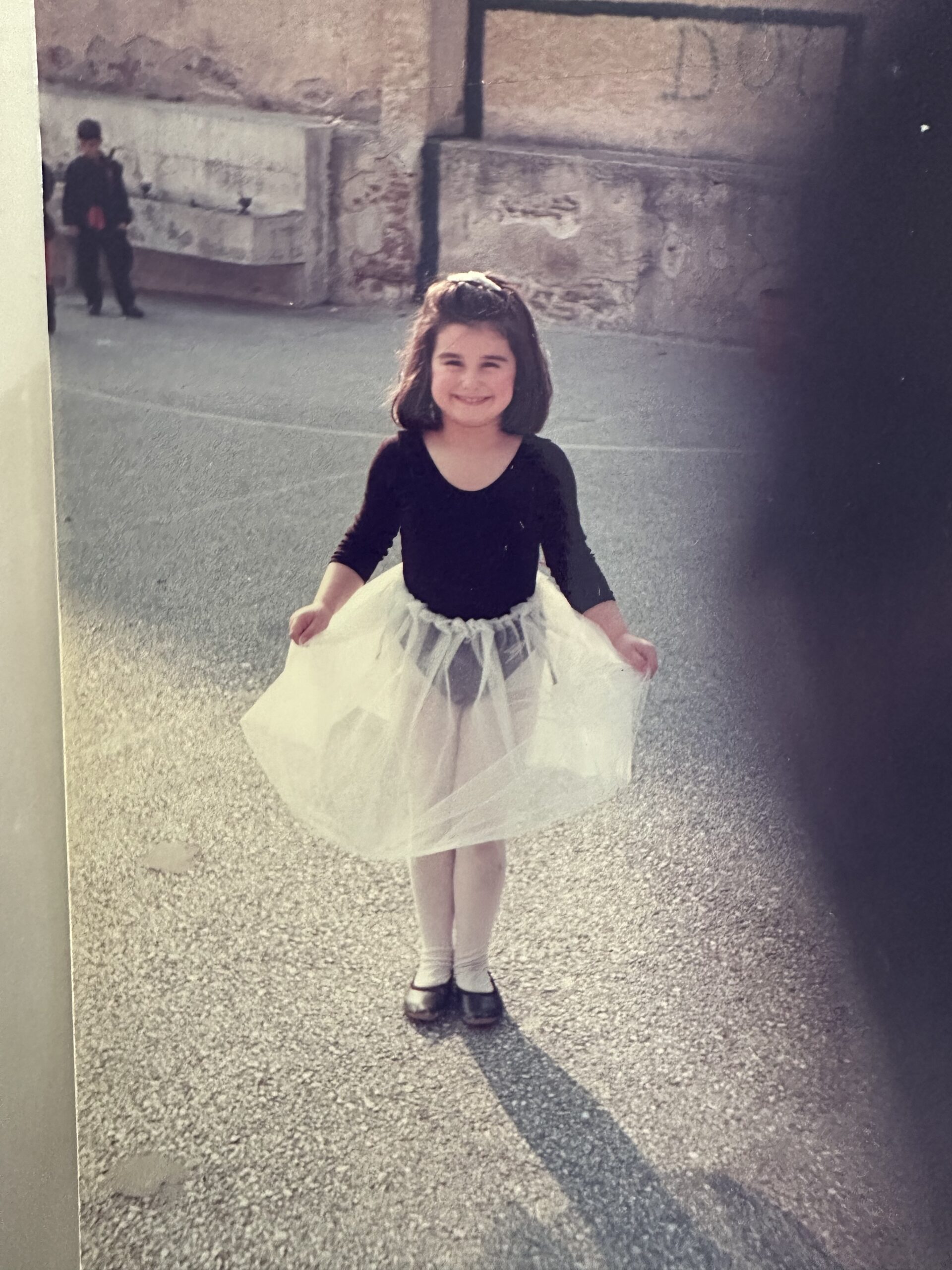
As a child, when people asked what I wanted to be, the answer kept changing — but never randomly.
First it was an actor. I played roles, told drama-soaked stories, changed my voice to become someone else entirely.
Then it was a psychologist — specifically for couples, because even as a child I was drawn to what happens between people, not just inside them.
Then came my diagnosis, and a new answer arrived with it: I wanted to change something in the world of diabetes.
I didn't know it then, but I wasn't collecting random dreams.
I was collecting the pieces I'd eventually need.
I was born and raised in Thessaloniki, Greece, where I later studied and earned my first degree.
I've now lived with Type 1 diabetes for 30 years — and my work today is what happens when all three of those childhood answers finally meet:
the performer's instinct for what's really being communicated,
the relational eye for what happens between a person and their body,
and the clinical drive to change something real in a condition I've lived inside for three decades.
I knew everything about blood sugar, glycemic response, and metabolic regulation before most people know what a glycemic index is.
I had the science.
I had the tools.
I understood the biology in a way most people never will.
And I still ended up using food to cope.
Knowledge is not the missing piece. Regulation is.
The body isn't being difficult.
It's looking for safety.
And once I understood that everything changed.

What I watched, over and over
For years I worked in clinical settings with women doing everything right.
Meal plans. Tracking. Clean eating. Willpower.
Some were even on GLP-1 therapy — the most advanced tool available.And still.
The same pattern, again and again.
I watched it happen so many times in hospital corridors and consultation rooms — not because these women lacked discipline, but because discipline was never the missing ingredient.
Progress — then pressure — then life — then the same loop.
Because here's what nobody says loudly enough: medication can reduce appetite.
It cannot rewrite the reason you reach for food when you're stressed, lonely, overstimulated, or finally alone at night.
When the treatment stops, the old pattern returns.
This isn't a judgment. It's the missing piece.
What actually changed me
Regulation isn't something I only study — it's something I practice, through movement.
Through dance, I see how the nervous system tries things out, hesitates, holds back, and slowly learns to trust.
Dance is also technique — something you have to learn, repeat, refine — and that combination of musicality and discipline is where I find healing, and expansion.
It's taught me to coach myself the way I coach my clients: to notice when I'm pushing myself toward self-made limits, and to catch that moment with a kinder, more useful inner voice instead of the old, harsher one.
Being a mother has taught me something else ; that regulation isn't just internal.
Environment matters just as much. My daughter has shown me this in the most direct way possible: bringing home snacks from friends, mentioning what's actually served at school.
Food behavior isn't shaped in a vacuum. It's shaped by what's around us: peers, environment, the food culture we're swimming in without noticing.
I was born and raised in Thessaloniki, Greece, where I studied and earned my first Bachelor's degree, before building my clinical life in Germany.
I still go back to Greece every year.
It's not a life split between two cities, but it is a life shaped by both places, and that's probably why I've never fully trusted either "just follow the plan" or "just feel your feelings" on their own.
You need both.
Why this became my work
.This is not theory. This is not a trend.
I work at the intersection of blood sugar stability, nervous system regulation, and behavioral patterns — because that's what actually creates permanent change.
I'm not here to give you another plan to follow perfectly.
I'm here to help you become the woman who doesn't need one.
If any of this sounds familiar — the discipline that works until it doesn't, the body you've been negotiating with for years — that's the work I built The Permanent Shift around.
All my love,
Niki